Does digitalization improve the local social climate? Or do digital apps destroy social interaction? Results from Etteln in Germany
When the Westphalian district of Etteln in the municipality of Borchen in North Rhine-Westphalia, Germany, won the 2024 Smart City Contest, it received widespread coverage in the German media.
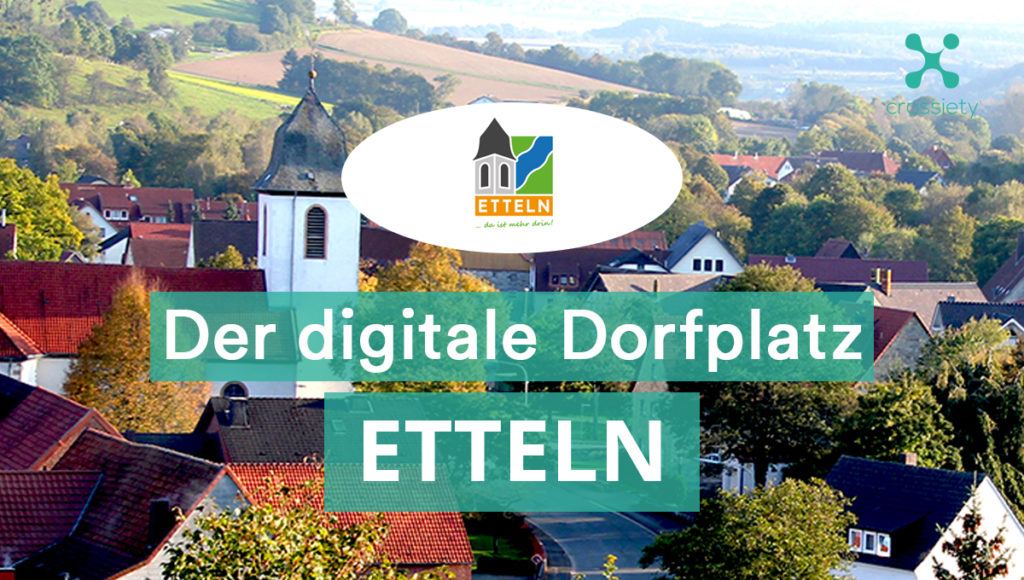 In addition to laying fiber optic cables, Etteln also offers numerous digital services, such as a digital marketplace for ideas, projects, and services. The German version of the World Social Capital Monitor was recently presented there: https://crossiety.app/news_cards/1391211
Within just three days, 65 of the 850 residents registered in the app took part and rated their non-material social goods such as helpfulness, friendliness, and willingness to contribute to the community through taxes and local investments.
Ratings of Etteln on a scale of 10 (high) to 1 (low)
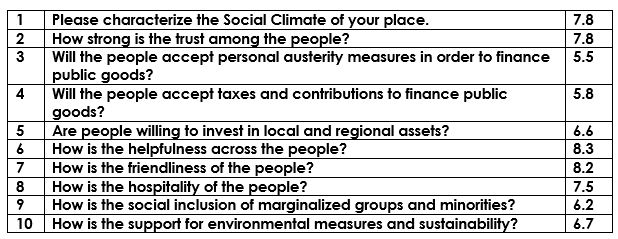
By German standards, these are very high values for what is therefore referred to as “social capital.” While the willingness to pay taxes is usually the highest value in Germany (question 4), helpfulness (8.3 points) and friendliness (8.2 points) are at the top of the list in Etteln.
This refutes classic prejudices about digitalization, such as that it promotes loneliness and destroys neighbourhoods. Or, conversely, where high social capital already exists, it is not threatened by digitalization. Local social media apps are therefore a meaningful contribution and expression of local social capital in any case.
As in other social media apps, some participants in Etteln tried to negatively influence the good rating by giving a low score ten times.
Such ratings are not taken into account in the evaluation. However, there was also a reason for this: “Newcomers have no chance of being integrated into this place! But the locals don’t want to admit it! Very stubborn. Very unfortunate.” This was a local say.
The globally unique opportunity to submit qualitative statements on trustyouplace.com means that even critical individual voices can be heard and taken into account. This form of social inclusion distinguishes the monitor from surveys in which only agreement or disagreement with prepared statements is asked for.
Kommentare deaktiviert für Does digitalization improve the local social climate? Or do digital apps destroy social interaction? Results from Etteln in Germany
admin am Januar 18th 2026 in Allgemein