AU and OIC advocating the consideration of local Social Capital in the UN SDGs
Since all UN member states adopted the 17 Sustainable Development Goals in 2015, countries have been voluntarily submitting progress reports. Eleven years later, wealthy OECD member states top the rankings and will do so by 2030. There is a simple reason for this: almost all SDG indicators depend on economic performance. The 44 countries classified by UNCTAD as Least Developed Countries are poor.
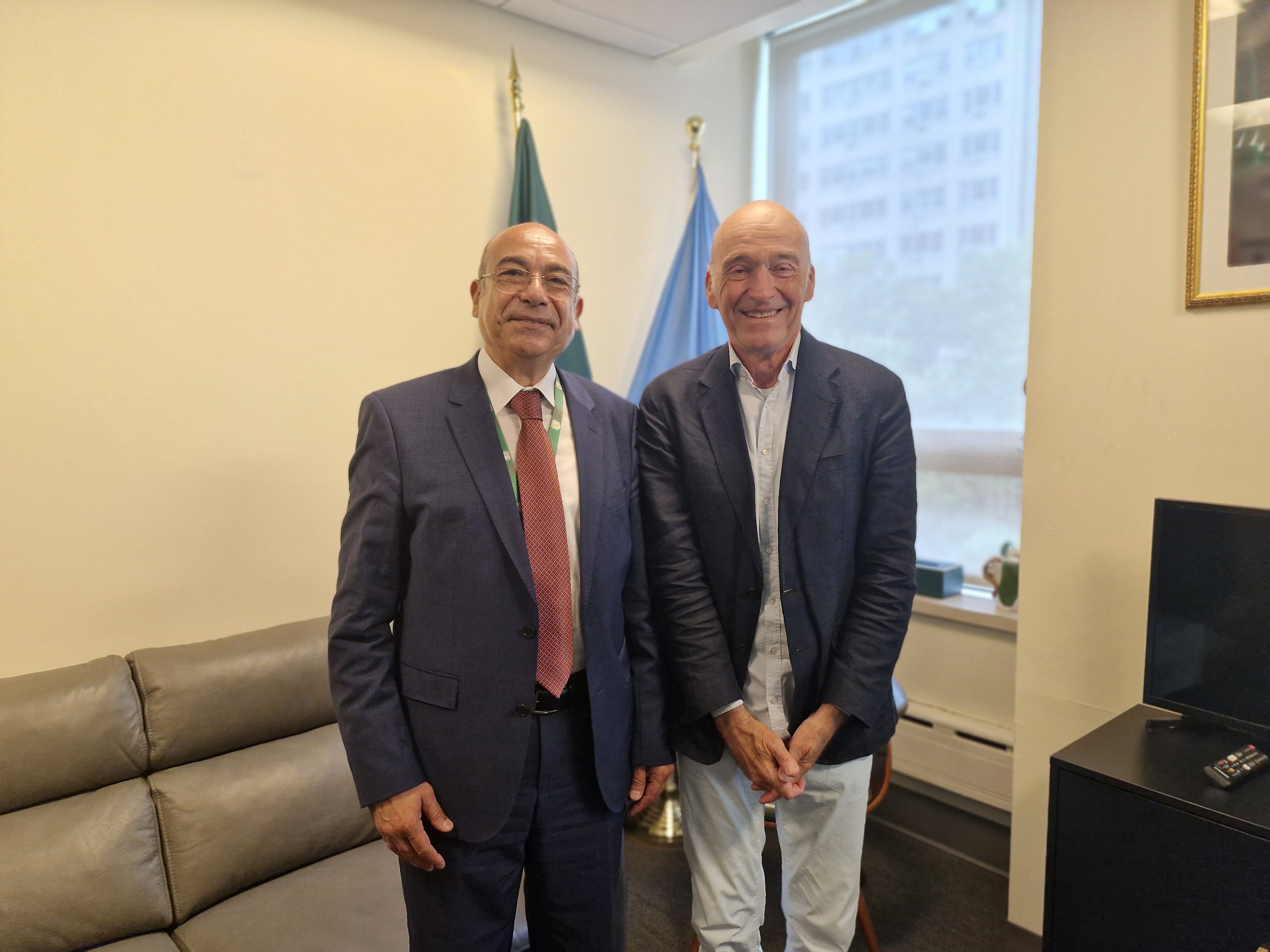
H.E. Ambassador of the African Union to the UN, Mohamed Edrees, with Alexander Dill
But can we really compare the average per capita income of countries that can print money at will—such as most OECD nations, including the U.S., Japan, and the EU—with that of countries whose people depend on local agriculture, remittances of migrants and the export of raw materials? Countries that cannot participate in the global capital markets?
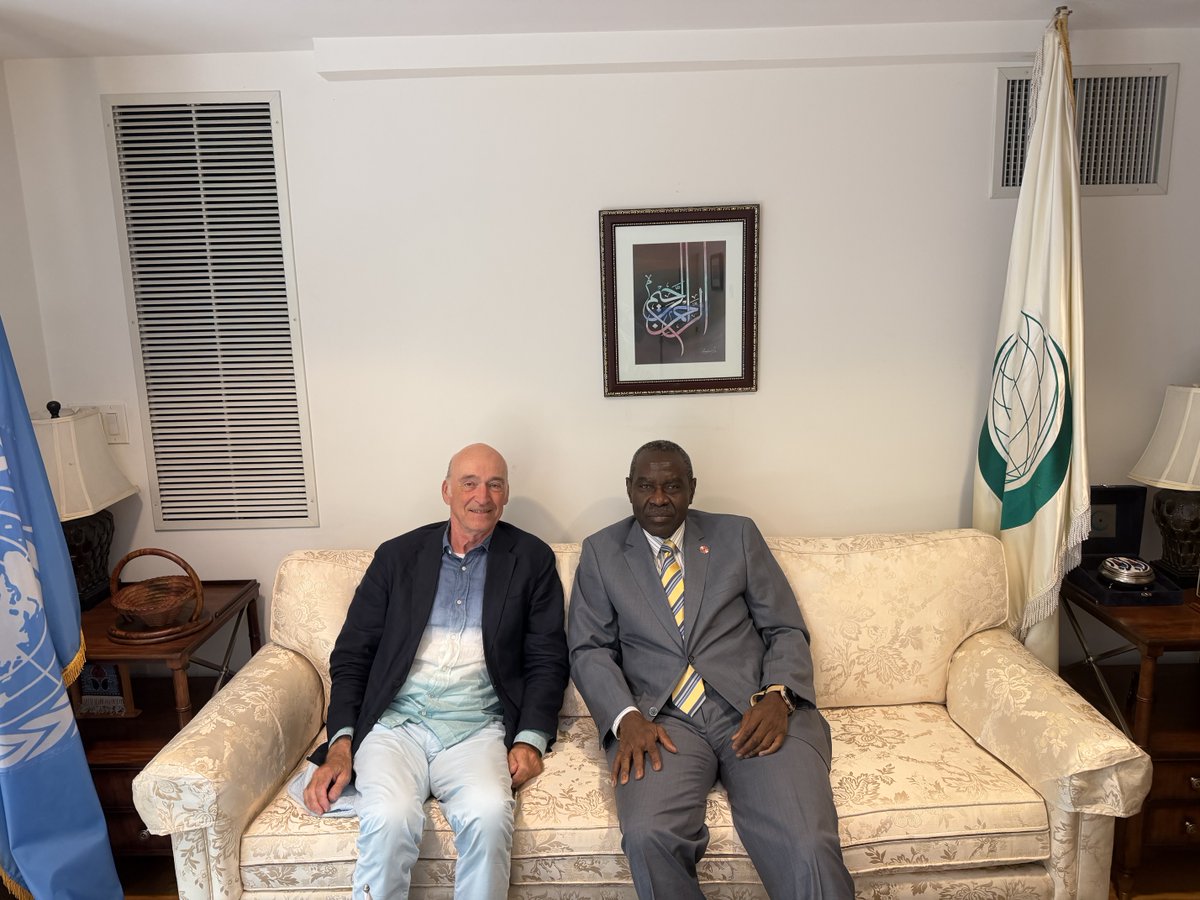
Ambassador of the OIC to the UN, H.E. Hameed Opeloyeru, with Alexander Dill
This question has been raised for decades under the banner of “Beyond GDP“, for which UN Secretary-General Antonio Guterres has launched an initiative.
Alexander Dill of the Basel Institute of Commons visited the UN ambassadors of two organizations in New York during the High-Level Political Forum on the SDGs; both organizations represent the majority of countries classified as LDCs: The African Union (55 members), represented by Ambassador Mohamed Edrees, and the Organization of Islamic Cooperation (OIC, 57 members), represented by its Ambassador, Hameed Opeloyeru.
Dill presented the ambassadors with new inclusive indicators that are already being tested in 54 African countries, as well as in Afghanistan and Bangladesh. On a scale from 10 (high) to 1 (low), these indicators measure what is known as social capital—non-material assets that even poor communities have developed, such as a willingness to help, friendliness, and hospitality.
The goal is also to recognize non-material values, as the development of a just economy depends on them. Many European countries, such as Switzerland, were once very poor and were only able to develop the resources that make them wealthy today through their social capital.
Economist Elinor Ostrom, whose research led to the founding of the Basel Institute of Commons and Economics in 2010, demonstrated that high levels of social capital promote economic development. She showed, for example, that water prices in Nepal were lower in areas where more cooperatives were involved in water supply.
In the 1970s, the World Bank estimated that social capital accounted for 85 percent of China’s economic output.
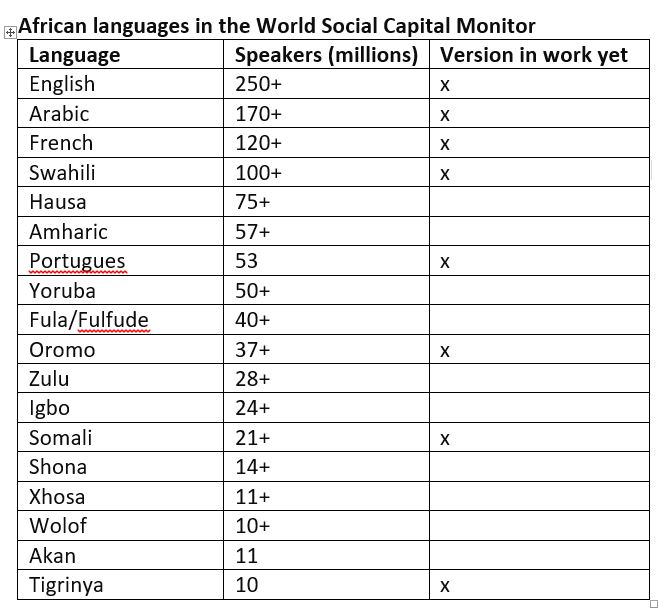
The Basel Institute of Commons and Economics now aims to launch an African Social Capital Monitor, which, for the first time, will also be available in native African languages. (see chart)
The African Union and the Organization of Islamic Cooperation might be the first to implement the results of decades of research on the impact of non-material assets.
Kommentare deaktiviert für AU and OIC advocating the consideration of local Social Capital in the UN SDGs
admin am Juli 21st 2026 in Allgemein